
AI agent for WhatsApp orders connected to your ERP
How an AI agent receives orders over WhatsApp, validates stock and pricing, and registers them in your ERP or CRM. Architecture, requirements, controls and pitfalls.
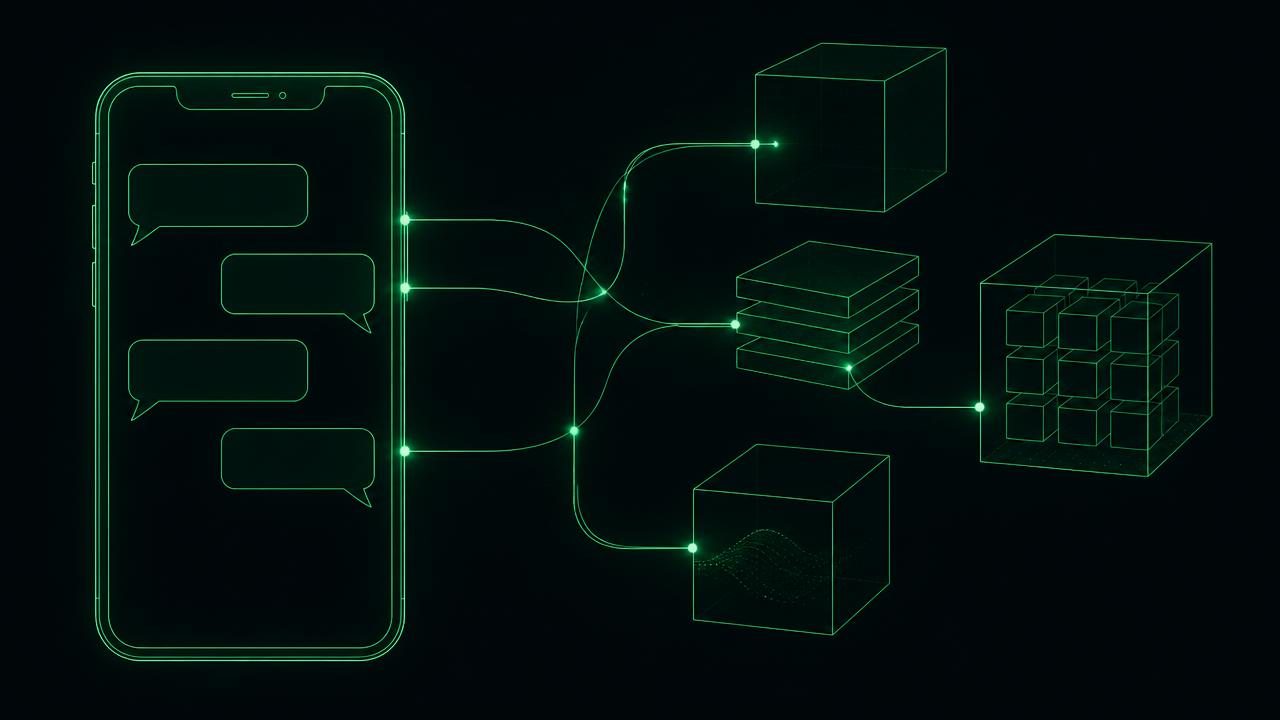
In most small and mid-size companies, orders don't arrive through a portal: they arrive on WhatsApp, as a voice note, a photo of a handwritten list, or a message at 9pm. Someone retypes it the next morning — and that's where errors are born.
A well-built AI agent doesn't replace your sales team: it removes the retyping, validates against real stock and pricing, and leaves the order ready for approval in the ERP.
What the agent actually does
- ▸Understands text messages, voice notes and photos of lists or delivery notes.
- ▸Identifies the customer by phone number and pulls their price list and terms.
- ▸Turns natural language into real SKUs (“two cases of the big green one”).
- ▸Validates available stock and flags alternatives or shortages.
- ▸Confirms the order with a clear summary before registering it.
- ▸Creates the order in your ERP or CRM via API and returns a confirmation number.
- ▸Escalates to a human for special discounts, overdue accounts or ambiguity.
Architecture, in plain language
Four pieces: the channel, the brain, the rules and the target system.
- ▸Channel: WhatsApp Business API (an official account, not a phone running the consumer app).
- ▸Brain: a language model with access to your catalog, pricing and customer context.
- ▸Rules: order minimums, credit holds, pack sizes, tax validations.
- ▸Target: the order registered in SAP, Odoo, Dynamics, Siigo, World Office, HubSpot or your own web app.
Requirements before you start
| Requirement | Why it matters |
|---|---|
| Verified WhatsApp Business API account | The only officially supported channel for automation |
| Catalog with SKU, pack size and synonyms | The agent maps customer wording to real items |
| Price list per customer or segment | Prevents orders at the wrong price |
| Available-stock lookup | Without it the agent promises what you don't have |
| ERP endpoint to create orders | Closes the loop with no manual entry |
| Written business rules | Minimums, credit holds, terms, delivery zones |
Controls: what separates a pilot from production
An agent that touches orders touches money. These controls are mandatory in our implementations:
- ▸Explicit customer confirmation before the order is registered.
- ▸Draft mode: orders await human approval during the first weeks.
- ▸Full traceability: every order stores the conversation that created it.
- ▸Hard limits: maximum amount, restricted items, blocked customers.
- ▸Never invents: if the item or price isn't found, it asks or escalates.
- ▸Personal-data handling with a privacy notice and limited retention.
Beyond the order
The same agent that takes orders usually ends up doing more, because it already knows the operational context: shipment status, outstanding balance, quick quotes, purchase and supply requests, and logging incidents from WhatsApp groups so nothing gets buried in the chat.
That's the same engine behind our Master Agent, which reads groups, categorizes incidents and follows up until closure.
How to measure success
- ▸Time from message to registered order (before: hours; target: minutes).
- ▸% of orders created with no human intervention.
- ▸Typing errors and credit notes caused by order mistakes.
- ▸After-hours orders that are no longer lost.
- ▸Hours freed up in the customer service team.
Frequently asked questions
Can I use my current WhatsApp number?+
A number can be migrated to WhatsApp Business API, but it then stops working in the regular app. Many clients prefer a dedicated number for orders.
What if the customer uses abbreviations or sends a photo?+
The agent handles text, audio and images. It is trained with the nicknames and synonyms your customers actually use, and when unsure it asks instead of guessing.
Can the agent get prices wrong?+
It shouldn't: prices are never generated by the model, they are looked up in your official list. If no valid price is found, it escalates to a person.
What about data protection?+
It is implemented with a privacy notice, consent, limited retention and restricted access, aligned with applicable personal-data regulations.
Keep reading
Sources and references
Want to watch the agent take a live order?
We'll run a demo with a sample catalog and define rules and controls together before connecting your ERP.